
As we head into 2026, we take this opportunity to look back over what 2025 brought to Ecomatters. From LCAs to EPDs, webinars, and conference presentations, we have been busy sharing our sustainability expertise.
Here are a few highlights we’re proud of.
Partnership with ARCHE Consulting
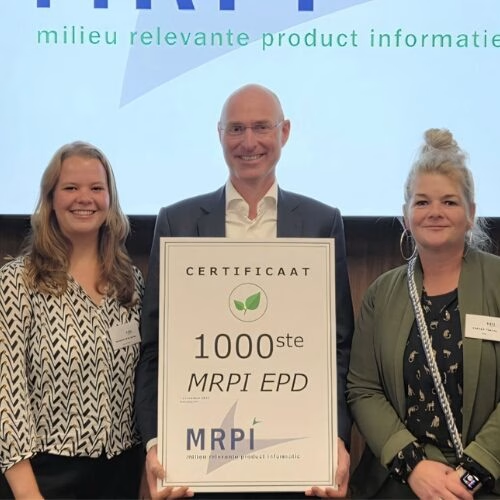
As announced at the beginning of the year, Ecomatters and ARCHE Consulting are working together to strengthen our sustainability expertise and expand the regulatory compliance services we offer clients. Throughout 2025, we collaborated on several projects, including an industry LCA for silver, the development of Scope 3 emission factors for the cobalt industry, and EPDs for the Nationale Milieudatabase. We look forward to another year of knowledge sharing and continued collaboration.
LCAs and EPDs
A core part of our work at Ecomatters is supporting companies with completing Life Cycle Assessments (LCAs) for their products and services. Once an LCA is in place, it becomes possible to create and publish an Environmental Product Declaration (EPD), which helps to clearly and concisely communicate the environmental impact of your product to customers and stakeholders.
This year we supported EPD development across a wide range of product types, including paints and coatings, wooden flooring, screws and fixings, and metal sheets. When performing an LCA study, each product group brings its own specific considerations as well as sustainability opportunities. If you would like examples, on our case studies page you can read about several of the projects we’ve worked on in more depth.
Scope 3 calculations
Calculating Scope 3 emissions can be an extensive process as it likely involves coordination between data owners across the value chain. In 2025 we worked alongside our clients to calculate Scope 3 emissions and identify environmental hotspots in their value chain.
One example was our work with Quiks Quality Potatoes B.V. Here, alongside the Scope 3 calculation, we developed an Excel-based tool that they can maintain and update for future accounting and reporting cycles.
We also supported AviusULD with an organisational footprint, calculating Scope 1–3 emissions in line with the GHG Protocol standards. A key takeaway from this study (and one we see often) was how dominant Scope 3 emissions can be in the overall footprint.
ESPR studies
In 2025 we contributed to several Ecodesign for Sustainable Product Regulation (ESPR) preparatory studies. These studies help inform product requirements at EU level. Working within a broader consortium of experts, our role focusses on assessing the environmental and economic impacts of the products under study and identifying and reporting substances of concern.
Over the year, that included work on industrial and commercial laundry appliances, household washing machines and household washer dryers, dishwashers (professional and household) and tyres.
Webinars
2025 marked the launch of two new webinars.
In April, together with the European Ventilation Industry Association, we hosted a session focussed on why Product Environmental Footprint Category Rules (PEFCRs) matter, and how industry can benefit from aligning on consistent rules and datasets.
To end the year, in December we ran a webinar on industry-wide LCA studies. In this webinar we explained to industry associations and sustainability managers what an industry-wide LCA study is, why it could be more suitable than conducting separate LCAs and provided practical tips on how to get started with the process.
We already have more webinars in the pipeline for 2026. If you would like to join a future session, you can sign up to our newsletter or follow us on LinkedIn to stay informed.
Knowledge sharing
Outside of client work, we have been busy building and maintaining our Knowledge Base: a space on our website where we pull together guidance and in-depth information on sustainability reporting, environmental footprinting and regulatory compliance. We hope this helps you find the information and answers you’re looking for faster.
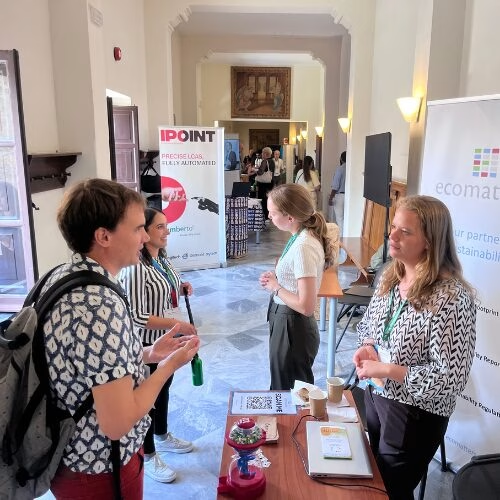
We also presented, together with our partners at ARCHE Consulting, at LCM 2025. Across three presentations we shared insights into the end-of-life allocation approaches for polymer recycling, applying the PEF method and its connection with European legislation and policy, and the opportunities and challenges of LCA within the precious metals industry.
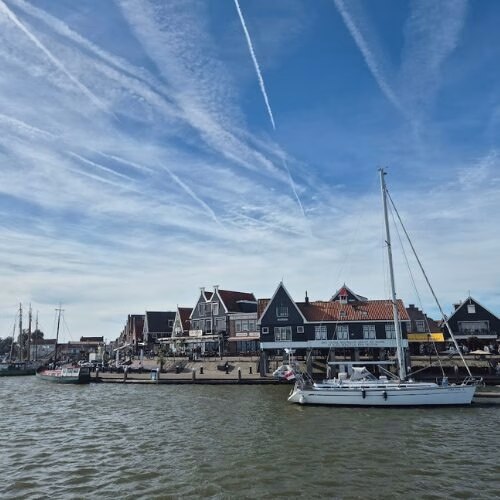
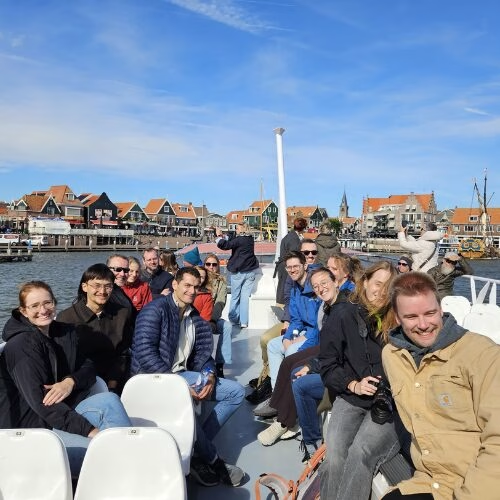
Finally, we enjoyed time together as a team during our annual team conference. This year we headed to Volendam to learn more about the traditional Dutch way of life. You can read more about what we got up to here.
This article was written by Liz Adams, a sustainability consultant at Ecomatters specialising in Life Cycle Assessment and Environmental Footprint calculations.